Description
A Thermal Mate Cup with Traditional Character
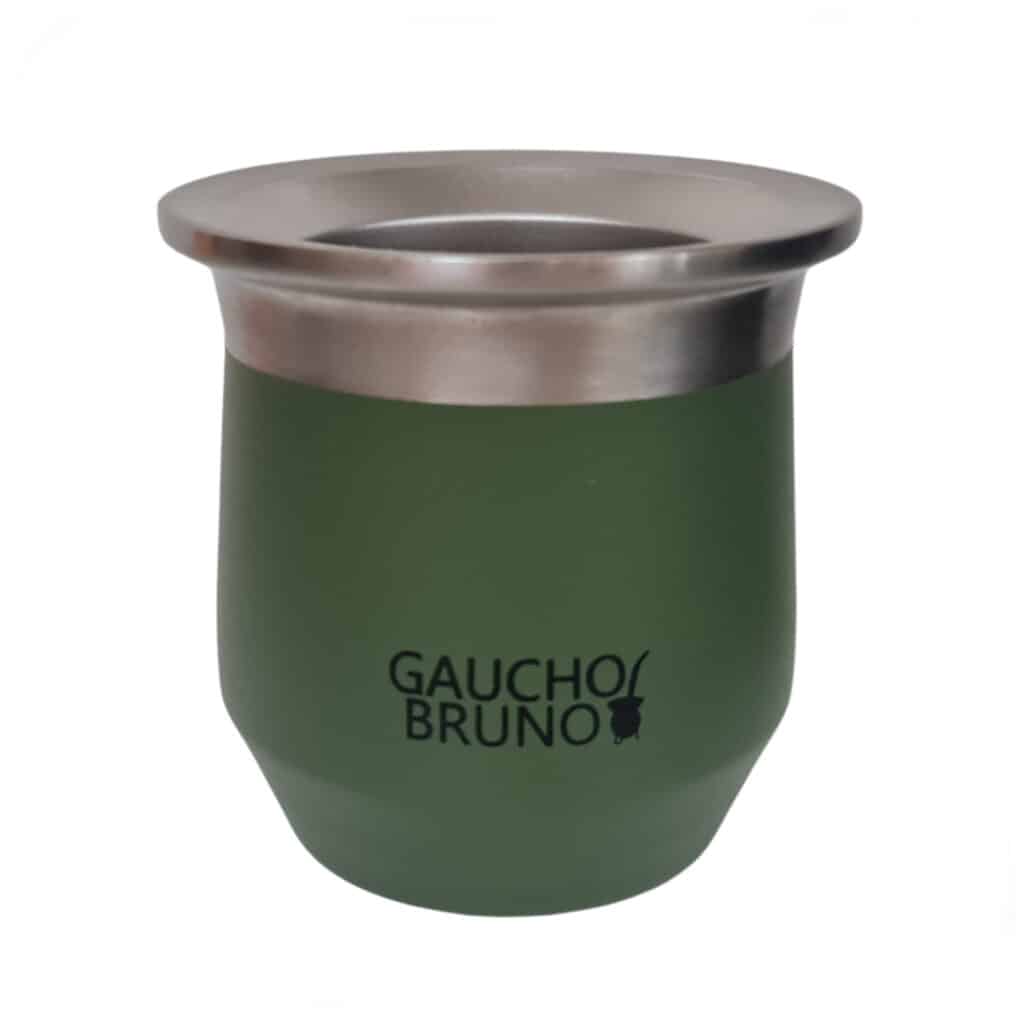
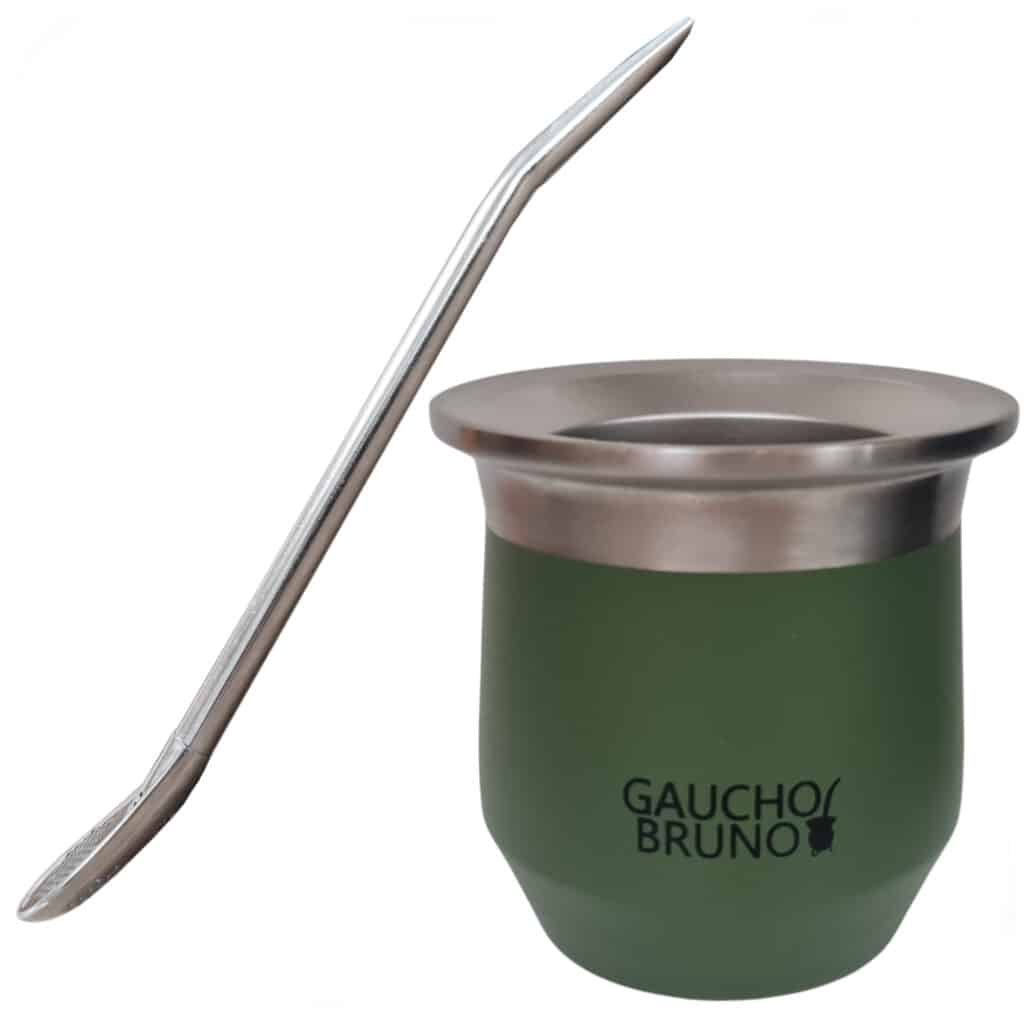
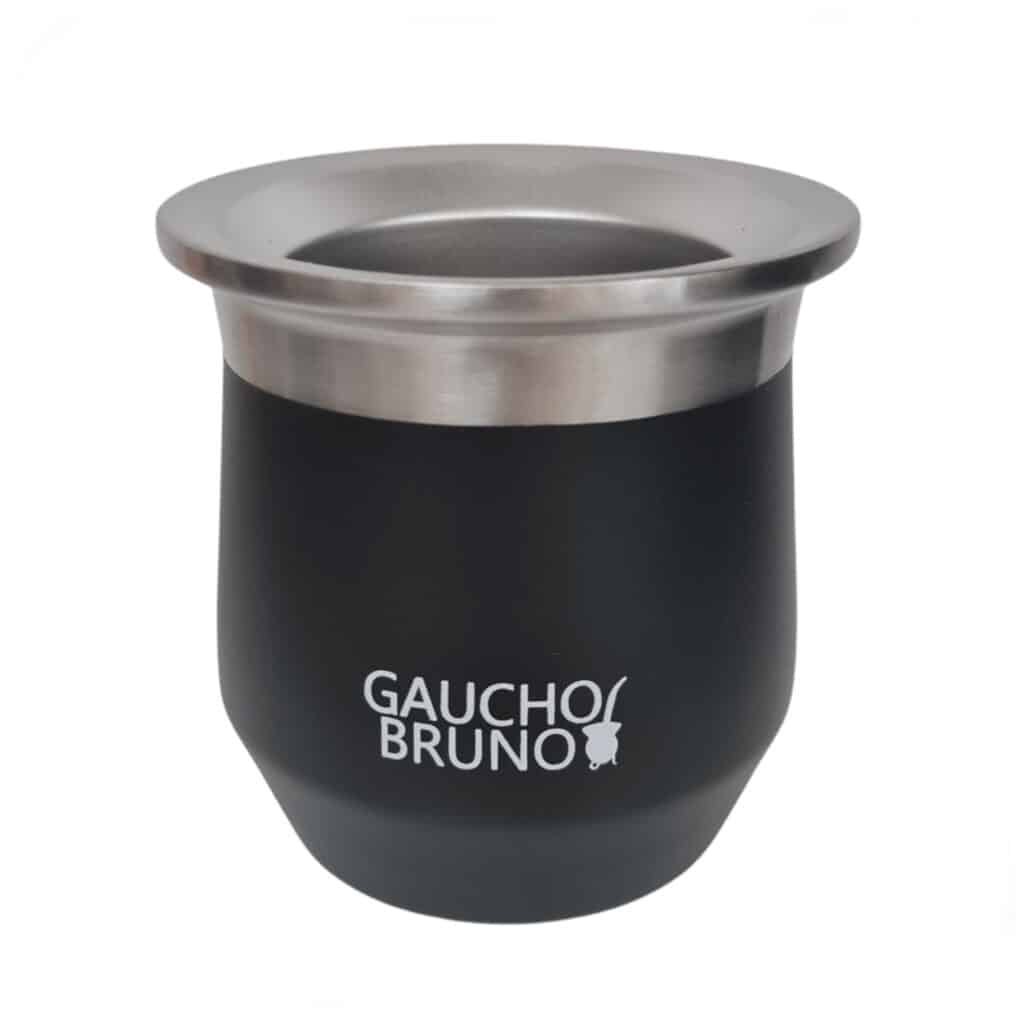
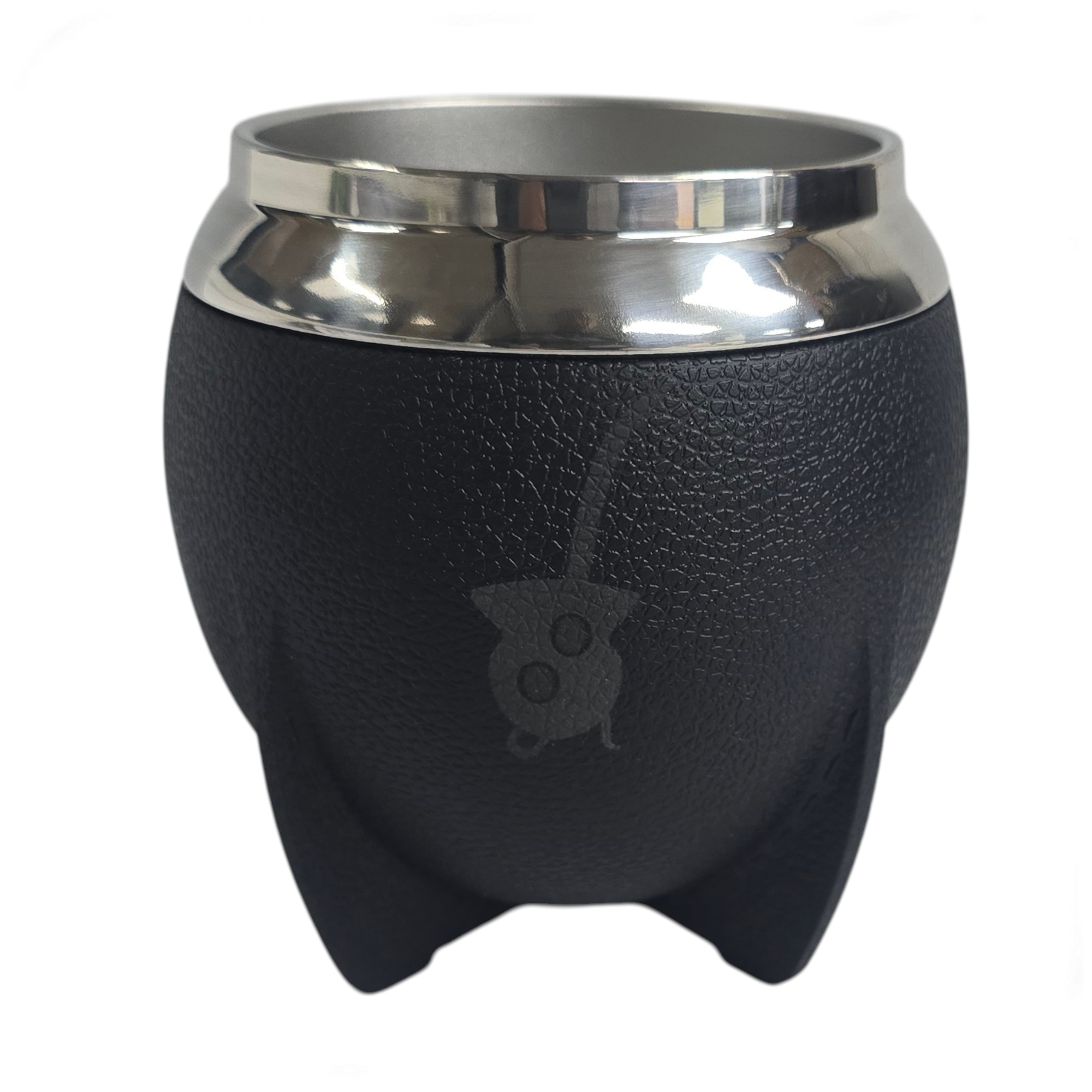
Some mate drinkers love the ritual of a natural gourd; others want something they can rely on every day without a second thought. This black thermal mate cup from Gaucho Bruno gives you both: the rounded silhouette and leather-bound character of a traditional Uruguayan gourd, built on a modern stainless steel core.
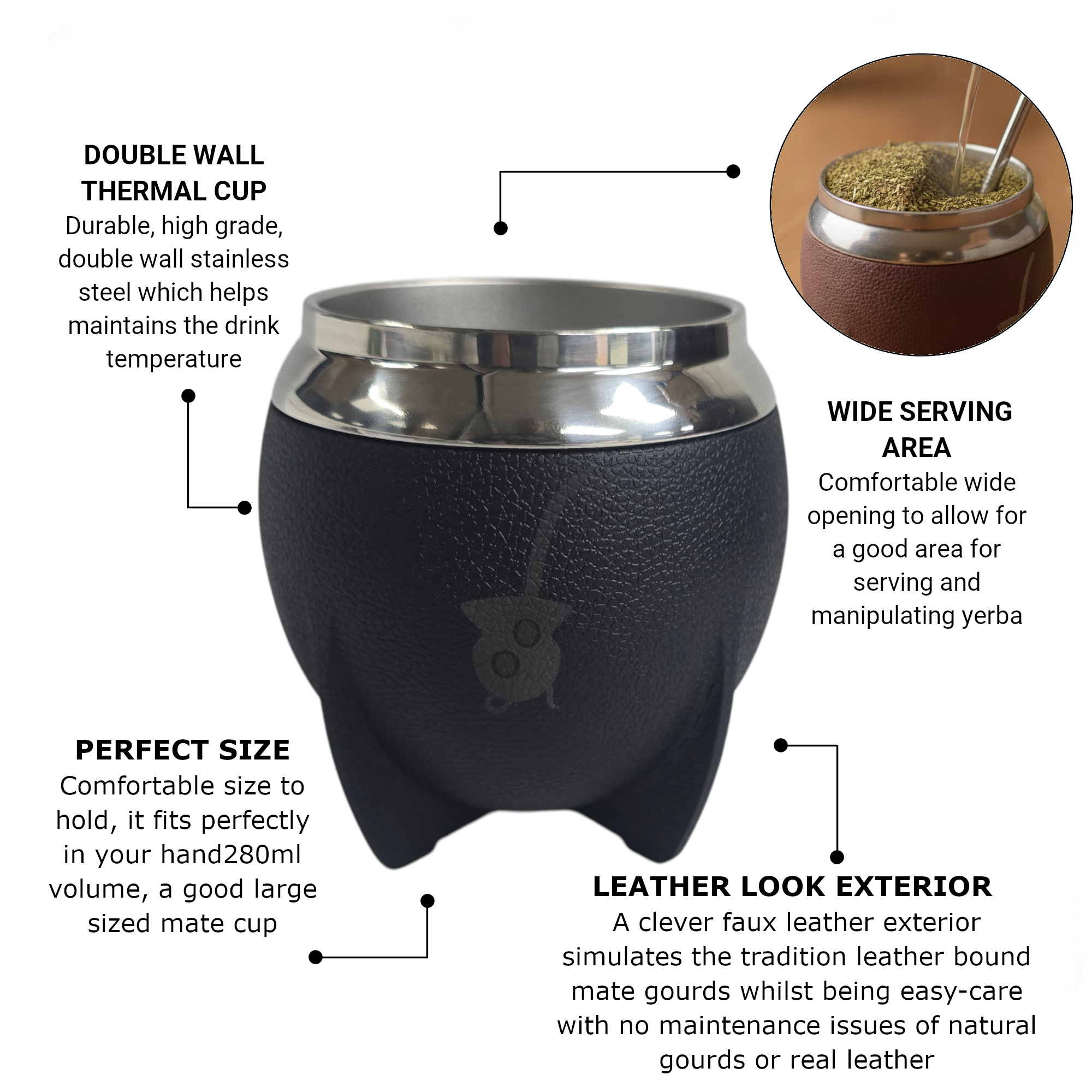
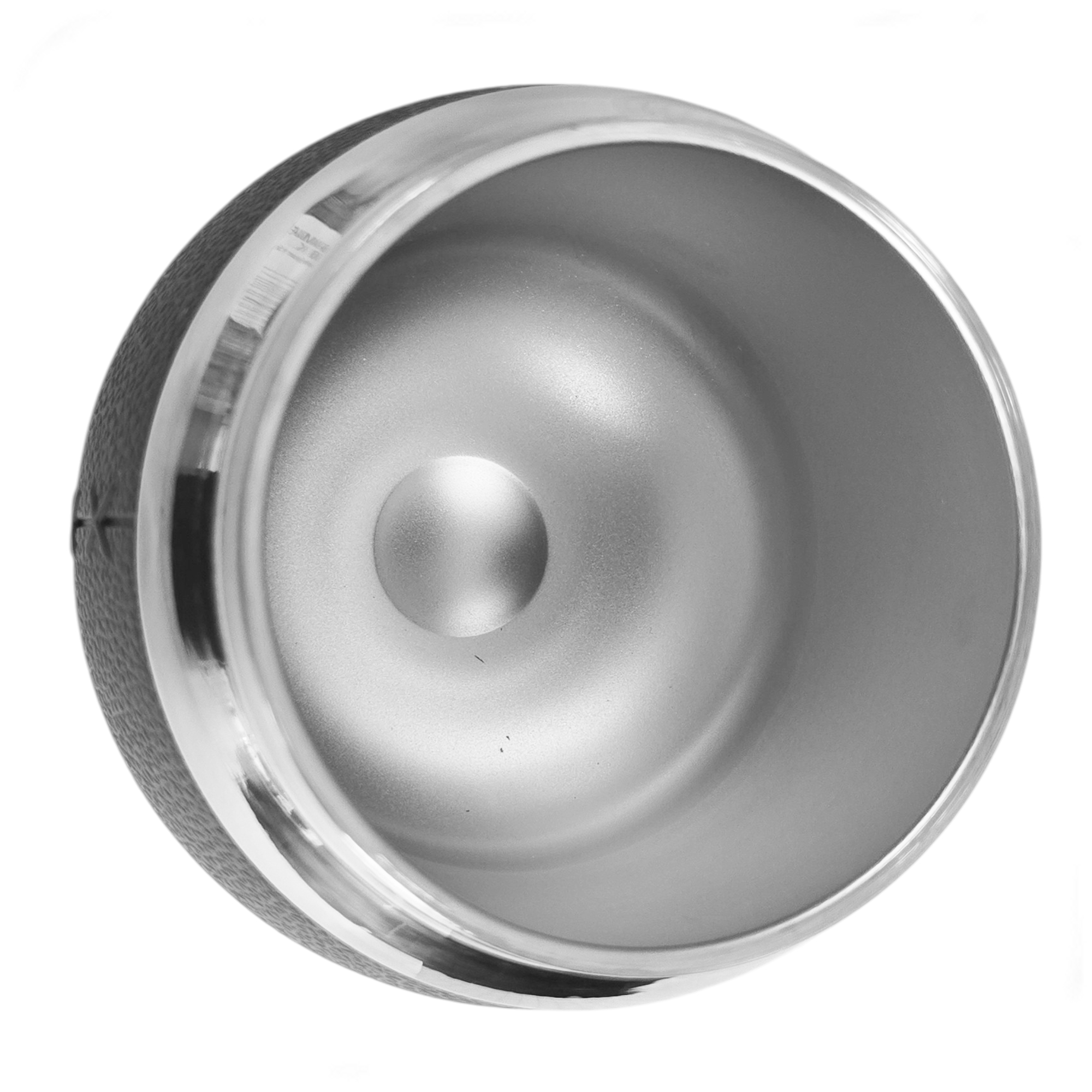
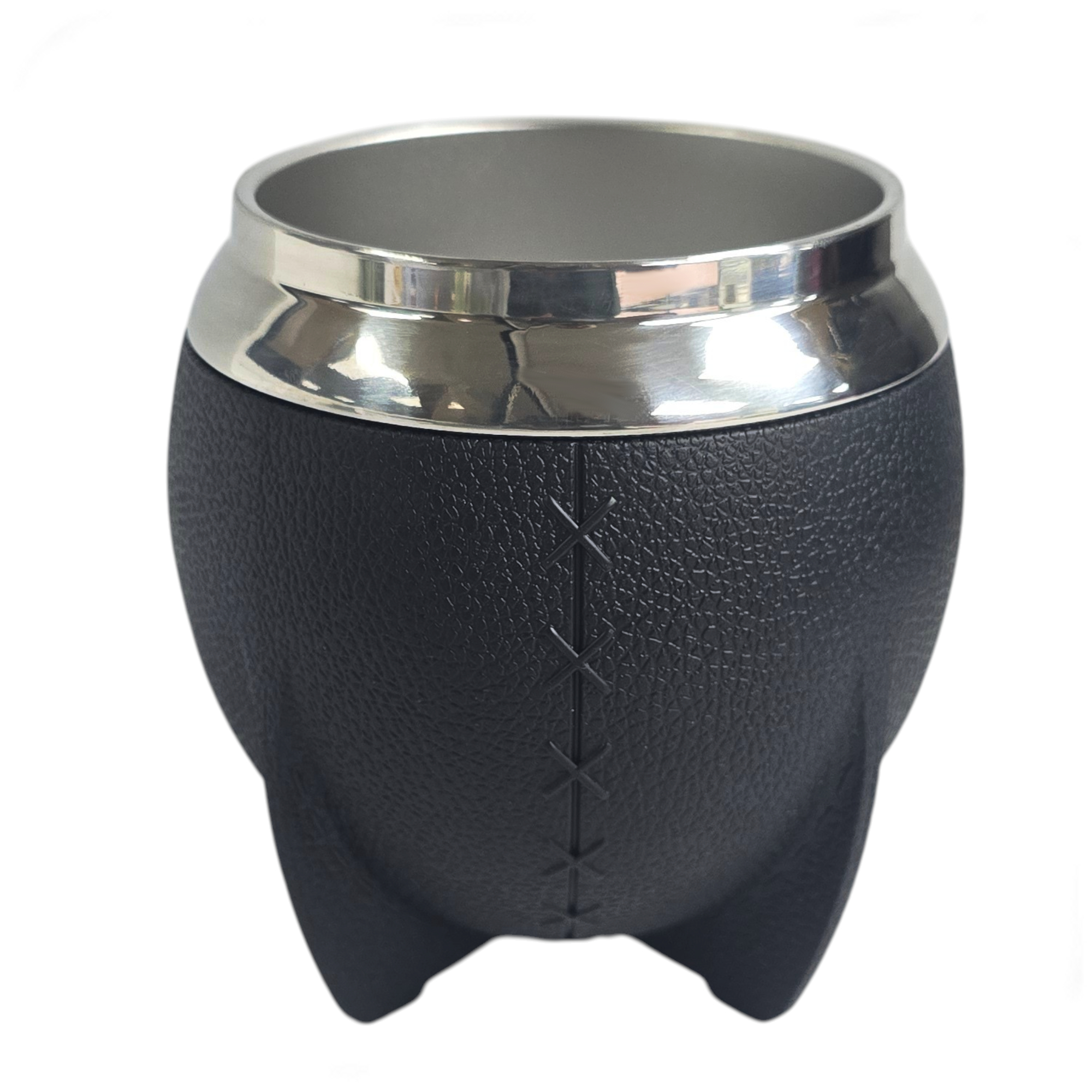
The insulated double wall construction holds heat well, so your water stays at a pleasant drinking temperature as you refill throughout the session, while the outer surface stays comfortable to hold. The black silicone finish has a fine leather grain and stitched seam detail, a modern take on the hand-sewn leather used on classic gourds, and the four moulded feet keep it standing firm on any surface.
Built for Everyday Mate
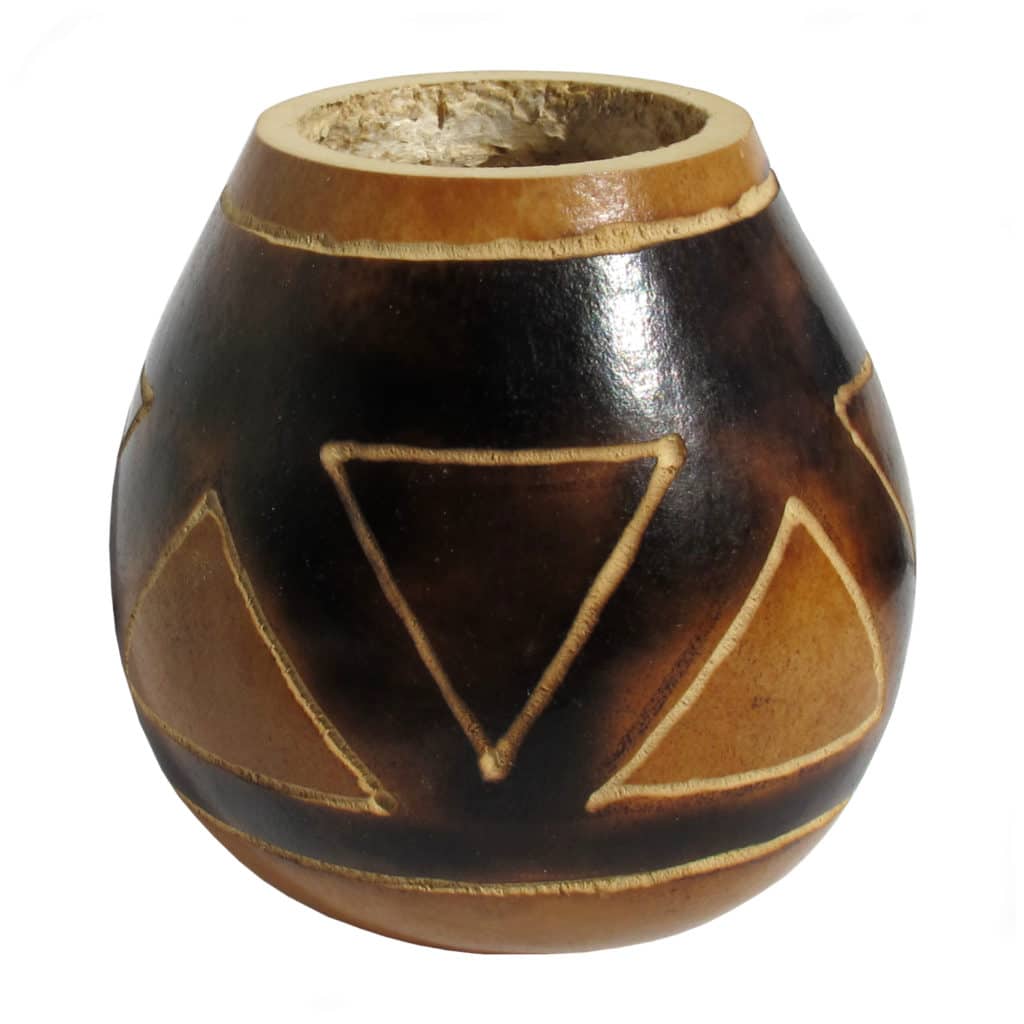
Traditional gourds are made from dried calabash fruit and are naturally porous. That’s part of their charm, but it also means they need curing before first use and careful drying afterwards to prevent mould and splitting. This yerba mate cup skips all of that. Stainless steel is non-porous, so there’s nothing to cure, no residual flavours carried from one brew to the next, and no risk of cracking. Once you’ve finished, rinse it out and leave it to dry; the silicone exterior simply wipes clean.
Its 280ml volume places it firmly in the large category, suited to the generous, full-gourd style preferred in Uruguay and southern Brazil. The wide opening gives plenty of room to work the yerba and place your bombilla exactly where you want it.
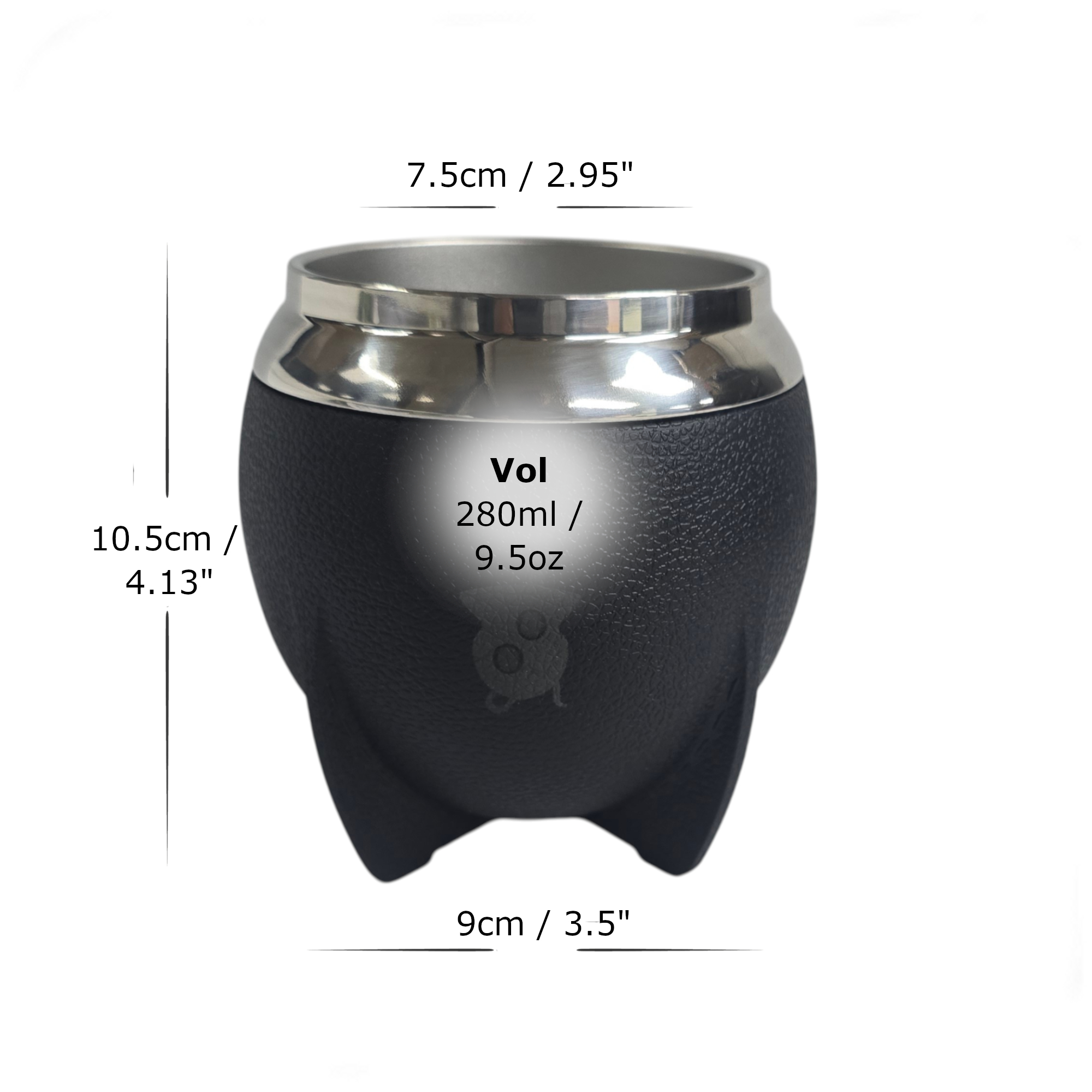
Dimensions:
- Height: 10.5cm
- Opening: 7.5cm
- Widest point: 9cm
- Capacity: 280ml
From Calabash to Stainless Steel: The Story of the Mate Gourd
The word mate comes from the Quechua mati, meaning a vessel or cup, so strictly speaking “mate” refers to the container as much as the drink. For centuries that container was a calabaza, the hollowed and dried fruit of the calabash plant. Its shape varied by region: in Uruguay, large wide-mouthed gourds with a metal rim (the virola) and a leather covering became the favourite, while Argentina embraced smaller pear-shaped gourds and tall wooden mates.
Over time, gourds became objects of craft and status. Silversmiths in the Río de la Plata region produced ornate silver mates for wealthy households, and leatherworkers developed the stitched coverings that protect a natural gourd and give it its distinctive look. Today, materials such as stainless steel, glass, ceramic and silicone sit alongside the traditional calabaza, each suited to a different kind of drinker.
Mate Across South America
Yerba mate is shared across several countries, each with its own habits. In Uruguay and Argentina it’s typically drunk hot and prepared by a cebador, who often takes the first, most bitter serving themselves (sometimes called the mate del zonzo, or “fool’s mate”) before passing the gourd around. In southern Brazil, chimarrão is made with a bright green, finely milled yerba in a large gourd called a cuia. In Paraguay, the heat inspired tereré, yerba mate brewed with iced water or juice and often fresh herbs.
Wherever it’s drunk, a few customs are shared: you drink the whole serving before passing it on, you don’t stir or move the bombilla, and mate is always something to be offered to others.
Getting the Best from Your Mate
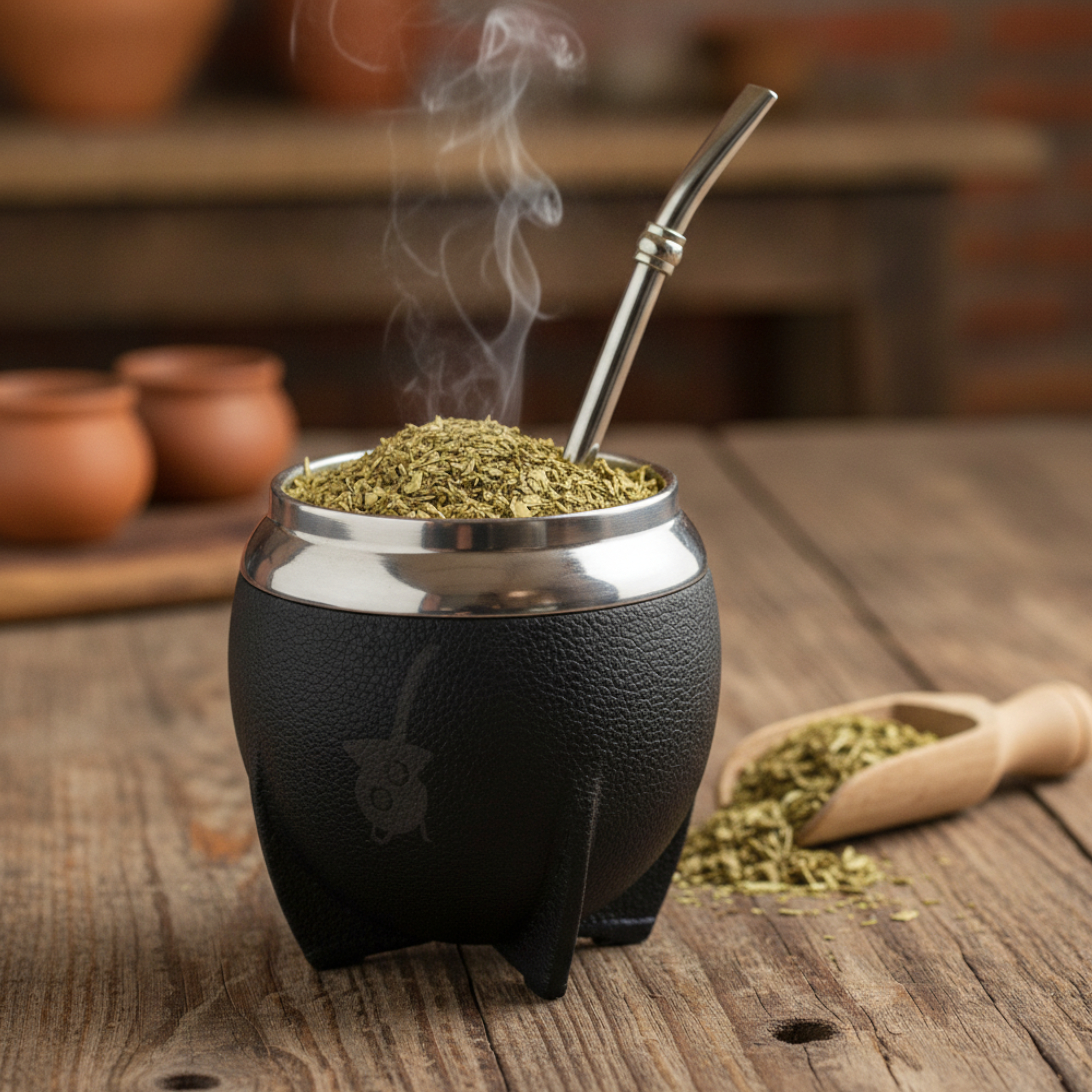
Fill the cup around two-thirds with yerba, shake the fine dust to the top, and tilt it to form a slope. Moisten the lower side with a splash of cool water, set your bombilla in place, then top up with hot water at 70–80°C. Avoid boiling water, which scorches the leaves and turns the flavour bitter. Our brewing guides cover each step in detail.
Care
Empty and rinse after use, then leave upside down to dry. Wipe the silicone exterior with a damp cloth as needed.
Also available in burgundy.