
Everything you need to know about South America’s most beloved sweet: from what it is and how it’s made, to the best ways to use it in your kitchen.
TLDR: Dulce de leche is a thick, golden spread made by slowly heating milk and sugar for hours until the Maillard reaction creates a rich caramel-toffee flavour. A kitchen staple in Argentina and Uruguay, it’s eaten on toast, in pastries, and straight from the jar. It’s not the same as caramel: the milk makes it special.
Last updated: 2026-03-09
Table of Contents
- What Is Dulce de Leche?
- Dulce de Leche vs Caramel: What’s the Difference?
- The History of Dulce de Leche
- How Is Dulce de Leche Made?
- What Can You Do with Dulce de Leche? Recipes & Uses
- What Are the Different Types of Dulce de Leche? A Buyer’s Guide
- Which Are the Best Dulce de Leche Brands Available in the UK?
- Where Can You Buy Dulce de Leche in the UK?
- How Should You Store Dulce de Leche?
- Frequently Asked Questions
What Is Dulce de Leche?
Dulce de leche is a thick, smooth, golden-brown spread made by slowly heating milk and sugar together for several hours until the natural Maillard reaction between milk proteins and sugars creates a deep, complex caramel-toffee flavour. It is one of the most popular food products in South America and a defining ingredient in Argentine and Uruguayan cuisine.
Pronounced “DOOL-seh deh LEH-cheh”, the name translates literally as “sweet of milk,” and that simple description tells you everything about what makes it special. Where caramel is all about heated sugar, dulce de leche is fundamentally about milk. That’s what gives it a richness and depth that pure caramel simply cannot match.
How It’s Made
The process is beautifully simple in theory and maddeningly demanding in practice. You take fresh whole milk, add sugar, and heat the mixture on a low flame, stirring constantly, for anywhere from 3 to 4 hours. During that time, the Maillard reaction (the same chemical process that gives browned meat, toasted bread, and roasted coffee their characteristic flavours) slowly transforms the pale liquid into a deep golden spread. A small amount of bicarbonate of soda is typically added to help the reaction along and prevent the milk from curdling.
The result is unmistakable: a thick, glossy, spreadable confection with a texture somewhere between peanut butter and honey. It coats the back of a spoon beautifully and has a gentle pull when you lift it.
Flavour Profile
If you’ve never tasted dulce de leche, imagine the most luxurious caramel you’ve ever had, then add layers of warm milkiness, butterscotch depth, and a gentle toffee finish. It’s intensely sweet but never cloying, with a complexity that comes entirely from the long, slow cooking of milk proteins. Some varieties carry subtle vanilla notes; others lean towards a darker, almost smoky sweetness depending on how long they’ve been cooked.
Cultural Significance
In Argentina, Uruguay, and Paraguay, dulce de leche is not a treat; it’s a staple. Argentines spread it on toast for breakfast (tostadas con dulce de leche), fill pastries with it, swirl it into ice cream, and sandwich it between biscuits to make alfajores. It appears at every meal, in every bakery, and in virtually every Argentine household. To say it’s popular would be an understatement; it’s a genuine national obsession, with Argentina alone consuming roughly 3 kilograms per person every year.

Dulce de Leche vs Caramel: What’s the Difference?
Dulce de leche and caramel look similar but are made through completely different chemical processes: dulce de leche is created by slowly heating milk and sugar (Maillard reaction), while caramel is made by heating sugar and water past its melting point (caramelisation). The distinction matters because it produces fundamentally different flavours and textures.
People often assume dulce de leche is just “Latin American caramel.” It’s an understandable mistake, since they share a similar golden-brown colour, but the two couldn’t be more different in how they’re made or how they taste. Toffee, meanwhile, is a third thing entirely.
Comparison Table
| Feature | Dulce de Leche | Caramel | Toffee |
|---|---|---|---|
| Main ingredients | Milk + sugar | Sugar + water (+ cream to finish) | Butter + sugar |
| Chemical process | Maillard reaction (proteins + sugars) | Caramelisation (sugar past ~170°C) | Caramelisation + emulsification |
| Cooking time | 3–4 hours | 10–20 minutes | 15–30 minutes |
| Texture | Thick, smooth, spreadable | Pourable sauce or chewy | Hard and brittle (or chewy) |
| Flavour | Rich, milky, complex toffee | Sweet, buttery, one-dimensional | Buttery, crunchy sweetness |
| Origin | South America (Argentina, Uruguay) | Europe (France, broadly) | England (early 19th century) |
| Best for | Spreading, filling pastries, alfajores | Drizzling, dipping, confectionery | Eating as sweets, baking |
Why the Milk Matters
The key difference is the milk. When milk proteins (primarily casein and whey) are heated slowly alongside sugar, the Maillard reaction produces hundreds of new flavour compounds, the same family of reactions responsible for the complex flavours in freshly baked bread, roasted coffee, and seared steak. This is why dulce de leche has a depth and complexity that simple caramel cannot replicate; caramelisation of sugar alone produces far fewer flavour compounds.
Caramel, by contrast, is essentially sugar heated to between 160°C and 180°C until it melts and darkens. Cream or butter is often added afterwards, which softens it, but the foundational flavour comes from the sugar alone. It’s delicious, but it’s a simpler flavour profile.
Toffee takes yet another approach: butter and sugar are boiled together to the “hard crack” stage (around 150°C–160°C), producing a brittle, crunchy sweet. Think Bonfire Night toffee apples: lovely, but a completely different experience.
So next time someone calls dulce de leche “caramel,” you’ll know: it’s not. It’s something richer, more complex, and, we’d argue, considerably more interesting.
The History of Dulce de Leche
Dulce de leche most likely developed in early 19th-century South America, though similar milk-and-sugar confections have appeared independently across cultures for centuries. Its exact origin is disputed, but there’s no question that Argentina and Uruguay made it famous and made it their own.
The Legend of General Rosas
The most famous origin story, and the one every Argentine schoolchild knows, dates to 1829. The tale goes like this: the powerful Buenos Aires governor Juan Manuel de Rosas was expecting a visit from his political rival, General Juan Lavalle, to negotiate a truce during Argentina’s civil wars. Rosas’s cook had put a pot of lechada (milk sweetened with sugar) on the fire to prepare the day’s mate. When Lavalle arrived early and Rosas was delayed, the cook rushed to attend to the visitors and forgot about the pot on the stove. By the time she returned, the milk and sugar had transformed into a thick, golden-brown paste.
Whether this story is true is another matter entirely. Historians note that recipes for slow-cooked sweetened milk appear in Argentine cookbooks from earlier in the 19th century, and similar confections existed across Latin America well before 1829. But legends have a way of sticking, and this one has become inseparable from dulce de leche’s identity.
A Global Family of Milk Sweets
Dulce de leche is, in truth, part of a broader family of milk-based confections that developed independently across multiple continents. In France, confiture de lait (literally “milk jam”) has been made in Normandy for centuries. In Southeast Asia, similar slow-cooked sweetened milks appear in various forms. The concept (heat milk and sugar together for a long time, get something extraordinary) is simple enough that many cultures arrived at it on their own.
What varies is the name, the exact method, and the cultural role it plays:
| Country | Name |
|---|---|
| Argentina, Uruguay | Dulce de leche |
| Brazil | Doce de leite |
| Colombia, Venezuela | Arequipe |
| Mexico | Cajeta (traditionally made with goat’s milk) |
| Chile, Peru | Manjar / Manjar blanco |
| France | Confiture de lait |
Mexico’s cajeta deserves a special mention: it’s traditionally made with goat’s milk rather than cow’s milk, which gives it a tangier, slightly gamier flavour. In the other countries, cow’s milk is standard.
The Numbers Today
Argentina’s relationship with dulce de leche goes well beyond nostalgia. The country produces approximately 120,000 tonnes per year, and the average Argentine consumes roughly 3 kilograms annually, the equivalent of about six standard 500g jars per person, every year. On 11 October, Argentines celebrate the Día Nacional del Dulce de Leche (National Dulce de Leche Day), a holiday officially established in 1998 to honour the confection’s cultural importance.
The Mate Connection
There’s a natural link between dulce de leche and yerba mate culture that often goes unmentioned outside South America. Alfajores, the iconic sandwich cookies filled with dulce de leche and often coated in chocolate or rolled in coconut, are the classic accompaniment to a round of mate. In Argentina and Uruguay, you’ll rarely find one without the other: a thermos of hot water, a gourd of mate, and a plate of alfajores is the default setup for any afternoon visit with friends or family. It’s a pairing as natural as tea and biscuits in Britain.
How Is Dulce de Leche Made?
Dulce de leche is made by slowly heating sweetened milk for 3–4 hours while stirring constantly, allowing the Maillard reaction between milk proteins and sugar to produce its characteristic golden colour and complex caramel-toffee flavour. There’s also a popular shortcut using condensed milk that takes roughly half the time.
The Traditional Method (From Scratch)
This is how dulce de leche has been made in South American kitchens for nearly two centuries. It requires patience, a strong stirring arm, and a willingness to stand by the stove for the better part of an afternoon.
Ingredients:
- 2 litres whole milk (full-fat; do not use skimmed)
- 600g white granulated sugar
- 1 vanilla pod, split lengthways
- ½ teaspoon bicarbonate of soda
Method:
- Combine and dissolve. Pour the milk into a large, heavy-bottomed saucepan (you want it no more than half full, as the mixture will bubble up). Add the sugar and stir over a medium heat until fully dissolved. Drop in the vanilla pod.
- Bring to the boil. Once the mixture reaches a gentle boil, add the bicarbonate of soda. It will foam up briefly; this is normal. The bicarb serves two purposes: it raises the pH slightly, which accelerates the Maillard reaction and helps develop colour faster, and it prevents the milk proteins from curdling during the long cook.
- Reduce and stir. Drop the heat to the lowest setting your hob will manage. Now stir. And keep stirring. For the next 3 to 4 hours, you need to stir the mixture regularly, ideally every few minutes, to prevent it catching on the bottom. A flat-bottomed wooden spoon or silicone spatula works best.
- Watch the colour. Over the first hour, not much seems to happen. The mixture reduces slowly and takes on a faint straw colour. By hour two, it begins to deepen to a golden hue. By hour three, it should be a rich amber. The aroma shifts from plain hot milk to something unmistakably caramelised and toffee-like.
- Test for readiness. Dip a wooden spoon into the mixture and hold it horizontally; if the dulce de leche coats the back thickly and doesn’t run off, it’s done. For a quicker check, drop a couple of drops onto the back of a cold spoon and blow to cool; if the drop holds its shape and doesn’t run, you’re there. It will thicken further as it cools. The final volume will be approximately 500g from the original 2 litres of milk, a dramatic reduction that concentrates all that flavour.
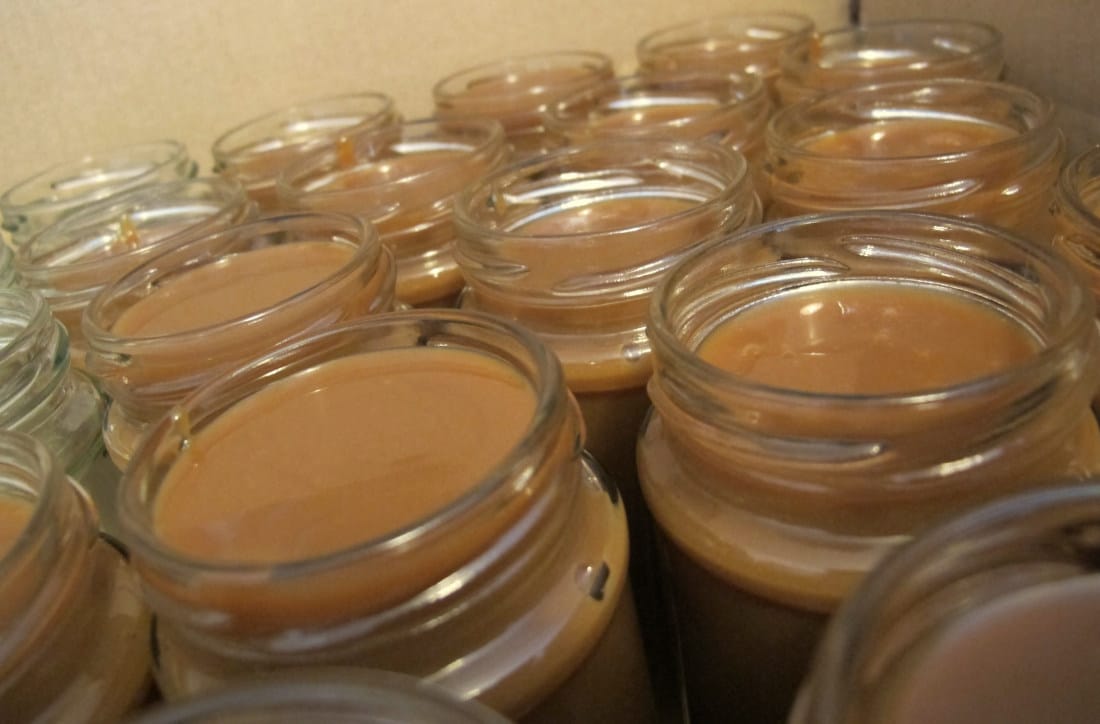
- Cool and store. Remove the vanilla pod, pour into sterilised jars while still hot (the cooling will create a vacuum seal), and allow to cool completely before refrigerating. It will keep in the fridge for up to 3 weeks, or up to 6 months if the jar was properly sterilised and sealed while hot.
The Quick Method (Condensed Milk)
If four hours of stirring sounds like more commitment than you had in mind, there’s a widely used shortcut that produces a very respectable result, though purists will note the flavour is sweeter and less complex than the traditional method, because condensed milk has already been processed.
Oven method (recommended):
- Pour a 397g tin of condensed milk into an oven-safe dish; a deep pie dish or small casserole works well.
- Cover tightly with aluminium foil.
- Place the dish inside a larger roasting tin and pour boiling water into the outer tin until it reaches halfway up the sides of the inner dish (a bain-marie).
- Bake at 220°C (425°F / Gas Mark 7) for 1.5 to 2 hours, removing the foil to stir every 30 minutes.
- The longer you cook it, the darker and thicker it becomes. At 90 minutes you’ll have a light, pourable dulce de leche; at 2 hours, a darker, thicker spread.
Stovetop tin method (the classic hack):
- Place an unopened 397g tin of condensed milk on its side in a large, deep saucepan.
- Fill the pan with water until the tin is submerged by at least 5cm.
- Bring to a gentle simmer, not a rolling boil, and cook for 2 to 3 hours.
- Critical safety note: keep the water level well above the tin at all times, topping up with boiling water as needed. If the tin is exposed to dry heat, it can burst. Check every 20–30 minutes.
- Remove from the water carefully with tongs and allow to cool completely, at least 2 hours, before opening.
The condensed milk method produces a result that’s noticeably sweeter and more one-dimensional than the traditional recipe. That’s because condensed milk already contains roughly 40–45% sugar by weight and has been heat-treated during manufacturing, so the Maillard reaction has less fresh milk protein to work with. It’s still delicious, just different.
Clásico vs Repostero: Which Consistency Do You Need?
In South America, dulce de leche is sold in two main styles, and knowing the difference will save you from sticky disasters in the kitchen:
- Clásico: the standard, spreadable consistency. This is what you want for toast, pancakes, ice cream, or eating straight from the jar (no judgement). It flows gently when warm and holds its shape when cool.
- Repostero (also called pastelero or repostería): a thicker, firmer version specifically designed for baking and pastry-making. It’s cooked longer so it holds its shape when piped or sandwiched between biscuits. If you’re making alfajores, this is what you need; clásico will ooze out of the sides.
To make repostero-style at home, simply cook the traditional recipe for an additional 30–45 minutes beyond the standard endpoint. The result should be firm enough to hold a peak when scooped.
Or Just Let the Experts Handle It
Of course, making dulce de leche from scratch is a genuine labour of love: rewarding, but time-consuming and easy to get wrong (burned dulce de leche is not something you forget in a hurry). For the authentic Argentine and Uruguayan taste without the 4-hour commitment, we stock a carefully curated range of the best dulce de leche brands at UruShop, all made the traditional way in South America and shipped to you from our UK warehouse. Same rich, complex flavour. None of the stirring.
What Can You Do with Dulce de Leche? Recipes & Uses
Dulce de leche is one of the most versatile ingredients in any kitchen, equally at home drizzled over breakfast pancakes as it is layered into an elaborate celebration cake. In Argentina and Uruguay, a household gets through roughly 3 kg of dulce de leche per person every year, and most of it never makes it near a recipe book.
Classic Uses
The beauty of dulce de leche is that it requires zero cooking skills to enjoy. Here are the ways South Americans eat it every single day:
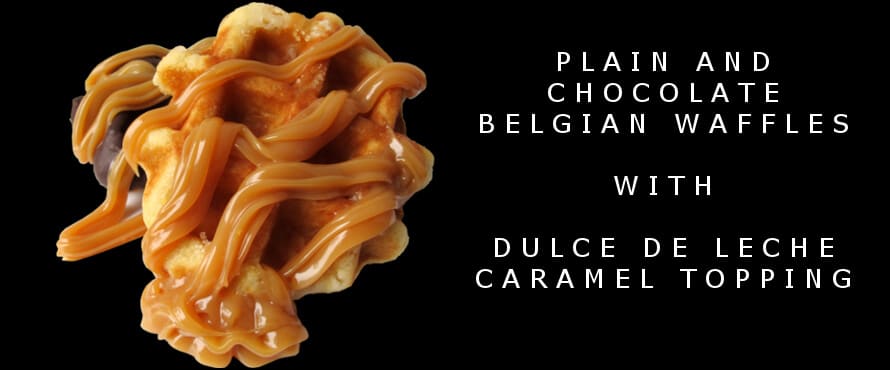
- Spread on toast, pancakes, waffles, or crêpes: this is the everyday Argentine and Uruguayan breakfast. Think of it as the South American equivalent of Nutella, except it came first (by about 150 years).
- As a filling for alfajores: Argentina’s beloved cookie sandwiches, where two crumbly biscuits hug a generous layer of dulce de leche. Argentines consume an estimated 6 million alfajores per day.
- Swirled into ice cream or as a topping: dulce de leche ice cream (helado de dulce de leche) is consistently the most popular flavour in Argentine ice cream parlours.
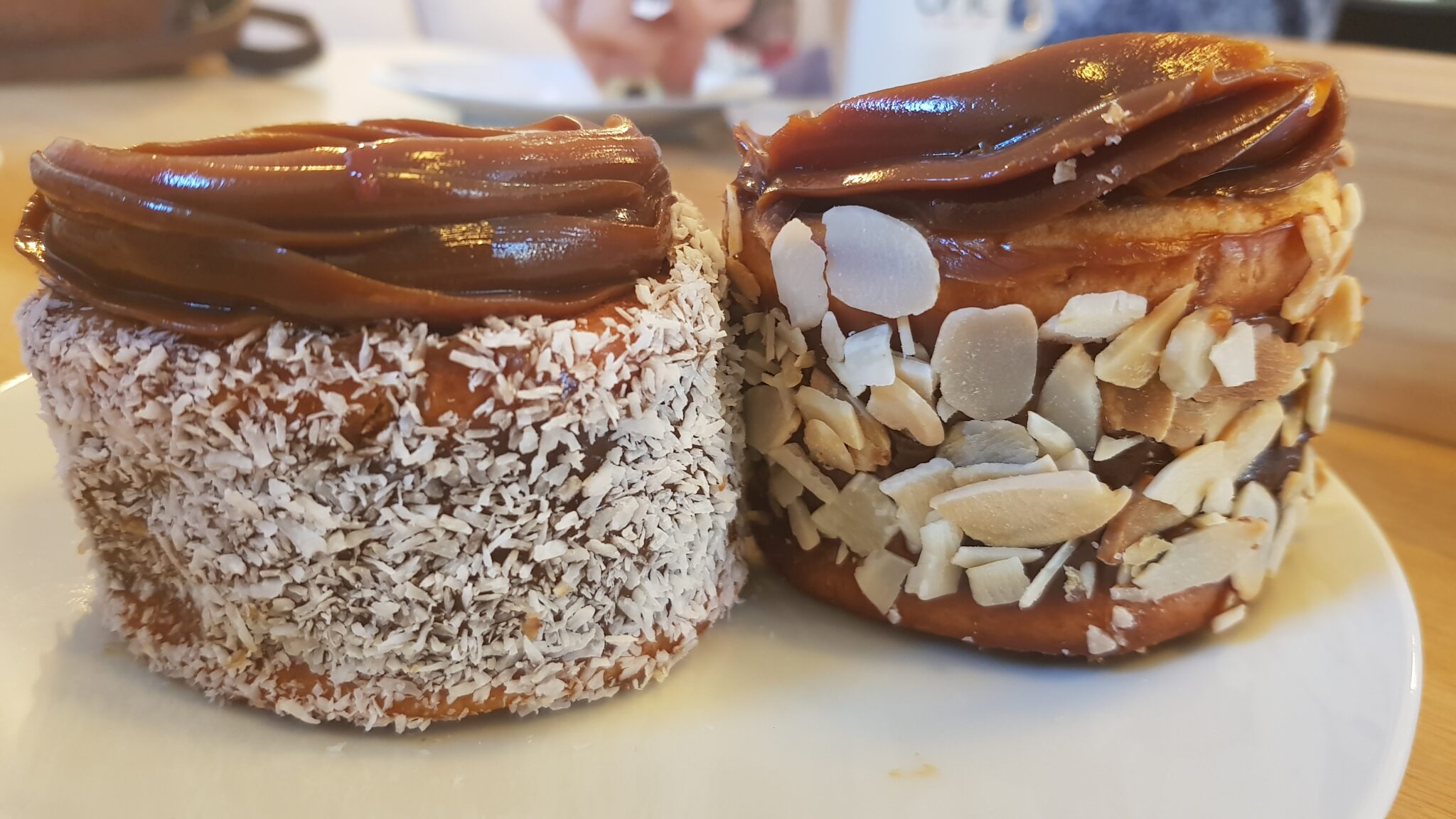
- Drizzled over churros: the classic street food combination found at every Argentine café and food stall.
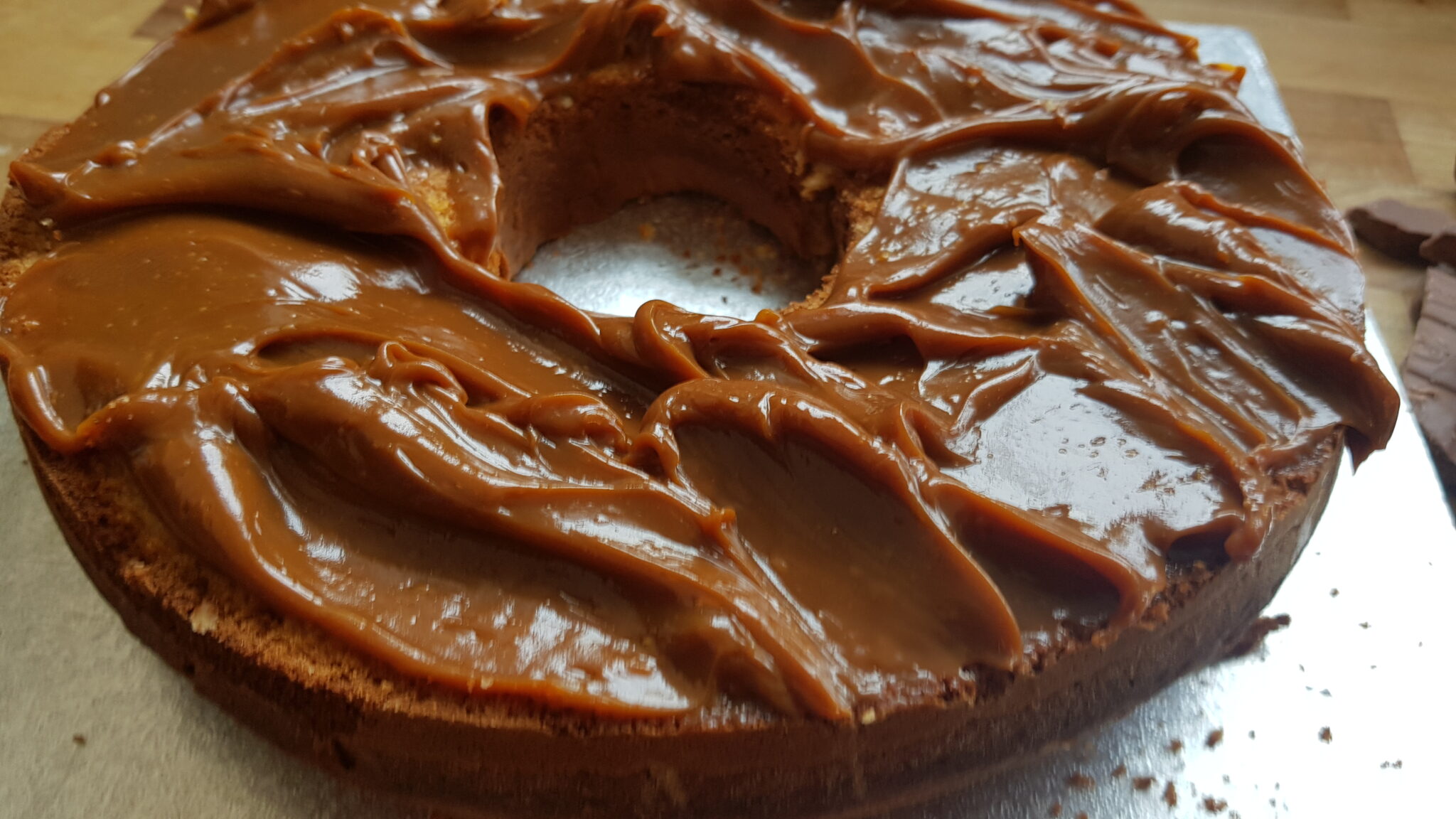
- As a cake filling or frosting: layered between sponge, spread over tortas, or piped onto cupcakes.
- Stirred into coffee: café con dulce de leche adds a rich, caramel sweetness that puts flavoured syrups to shame.
- Eaten straight from the jar with a spoon: no judgement here. Everyone does it. In fact, if you haven’t done this, you haven’t truly experienced dulce de leche.
Our Favourite Dulce de Leche Recipes
We’ve developed a collection of tried-and-tested recipes that range from 10-minute no-bake treats to showstopping desserts. Every recipe uses real dulce de leche, no substitutes, no shortcuts.
Traditional Alfajores de Maicena | 45 min | Medium
The authentic Argentine cornflour biscuit sandwich filled with dulce de leche and rolled in coconut, the recipe that launched a thousand afternoon teas.
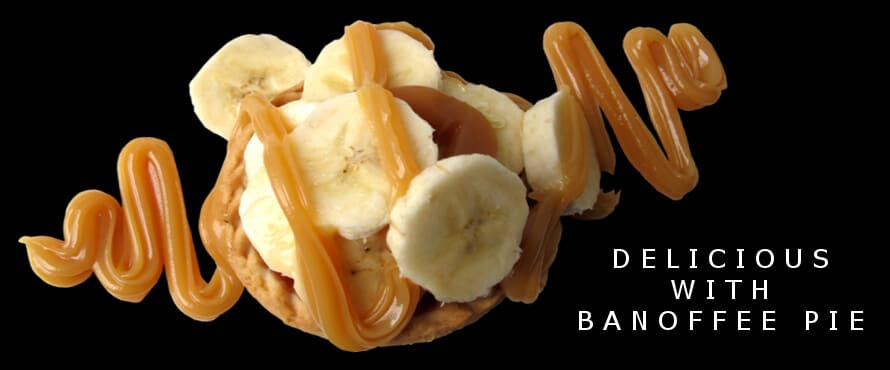
Banoffee Pie with Dulce de Leche | 20 min prep | Easy
A British classic given a proper South American upgrade: real dulce de leche replaces the usual boiled condensed milk for a deeper, more complex flavour. (Fun fact: the “offee” in “banoffee” comes from toffee, and dulce de leche is essentially the South American cousin of toffee.)
Dulce de Leche Brownies | 40 min | Easy
Rich chocolate brownies with generous swirls of dulce de leche throughout: fudgy, gooey, and dangerously moreish.
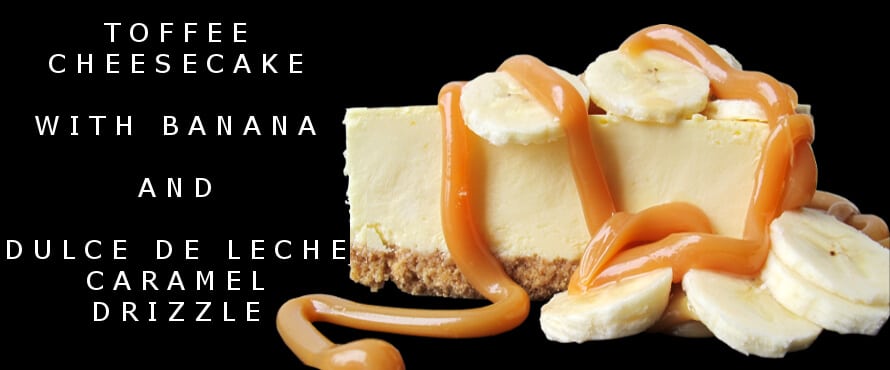
Dulce de Leche Cheesecake | 1 hr + chill | Medium
A creamy baked cheesecake with dulce de leche swirled through the filling and drizzled over the top, a guaranteed showstopper at any dinner party.
3-Ingredient Dulce de Leche Fudge | 10 min prep | Easy
Quite possibly the simplest sweet treat you’ll ever make: just dulce de leche, chocolate, and butter, set in the fridge.
No-Bake Dulce de Leche Mousse | 15 min prep | Easy
A light, airy mousse that lets the flavour of the dulce de leche shine: no oven required, just a whisk and a few hours of patience.
Chocolate Dulce de Leche Truffles | 20 min | Easy
Hand-rolled truffles with a dulce de leche centre coated in dark chocolate: perfect for gifts or for keeping all to yourself.
Dulce de Leche Loaf Cake | 1 hr 15 min | Medium
A moist, tender loaf cake with dulce de leche baked right into the batter and drizzled over the top, ideal with a cup of tea.
Rogel (Torta Alfajor) | 2 hrs | Advanced
The ultimate Argentine celebration cake: multiple paper-thin pastry layers sandwiched with dulce de leche and topped with Italian meringue. A true labour of love.
Dulce de Leche Thumbprint Cookies | 30 min | Easy
Buttery shortbread-style cookies with a thumbprint well filled with dulce de leche: simple enough for kids to help make, elegant enough for afternoon guests.
What Are the Different Types of Dulce de Leche? A Buyer’s Guide
Not all dulce de leche is the same: there are distinct types made for different purposes, and choosing the right one makes a real difference to your results. The two main categories are clásico (classic) for eating and repostero (pastry grade) for baking, but regional styles and flavoured varieties add further depth to the range.
Clásico (Classic)
Classic dulce de leche is the smooth, spreadable variety that most people picture when they hear the name. It has a soft, flowing consistency: thick enough to sit on toast without running off the edge, but loose enough to drizzle from a spoon. The flavour is sweet, milky, and deeply caramelised, with a rich butterscotch warmth.
This is the type to reach for when you’re spreading it on pancakes, stirring it into coffee, swirling it over ice cream, or eating it straight from the jar. It typically contains around 55–65% sugar and approximately 280–310 calories per 100g, depending on the brand. If you’re new to dulce de leche, clásico is where to start; it’s the everyday version that South Americans grow up with.
Repostero (Baking/Pastry Grade)
Repostero dulce de leche is specifically formulated for baking and pastry work. It contains more milk solids and less moisture than the classic version, giving it a noticeably thicker, firmer texture that holds its shape when piped, spread between cake layers, or used as a filling.
This is the essential choice for alfajores, rogel, layered cakes, and any application where you need the dulce de leche to stay put rather than ooze out. Professional bakers in Argentina and Uruguay use repostero almost exclusively; it pipes cleanly, doesn’t weep, and sets to a stable consistency. You can eat it from the jar too, but you’ll notice it’s denser and less “saucy” than the classic version. For the best results in baking, always use repostero when the recipe calls for a filling or piping.
Chocolate and Flavoured Variants
Several brands have expanded the dulce de leche range with flavoured versions. La Salamandra produces a popular chocolate dulce de leche that blends cocoa into the classic recipe, creating something like a caramel-chocolate hybrid: excellent on toast, crêpes, or as an ice cream topping. Los Nietitos offers a hazelnut dulce de leche that adds a nutty richness reminiscent of praline.
These flavoured varieties are best enjoyed as spreads and toppings rather than for baking, where the added flavours can behave unpredictably. They make a brilliant gift for anyone who thinks they’ve tried everything.
Regional Styles
Dulce de leche varies noticeably across South America, and knowing the regional differences helps you find your preferred style:
- Argentine dulce de leche tends to be thicker, more deeply caramelised, and more intensely flavoured. The Maillard reaction is pushed further, producing darker colour and a robust, almost toffee-like depth. Brands like Chimbote, Havanna, and La Salamandra represent this style.
- Uruguayan dulce de leche is often slightly smoother and creamier, with a more delicate milk-forward flavour. Los Nietitos and Conaprole are the iconic Uruguayan brands; look for a lighter golden colour and a silkier texture.
- Brazilian (doce de leite) is typically the lightest of the three: paler in colour, slightly less intense, and often a touch runnier. The cooking time is generally shorter, preserving more of the fresh milk character.
Quick Comparison
| Type | Texture | Best For | Example Brand |
|---|---|---|---|
| Clásico | Smooth, spreadable | Toast, pancakes, ice cream, coffee, eating by the spoon | Chimbote Classic, Los Nietitos |
| Repostero | Thick, firm, pipeable | Alfajores, rogel, cake filling, piping | Chimbote Repostero, Onda Onda Repostero |
| Chocolate | Smooth, rich | Spreading, ice cream topping, crêpes | La Salamandra Chocolate |
| Hazelnut | Smooth, nutty | Spreading, toast, dessert topping | Los Nietitos Hazelnut |
Which Are the Best Dulce de Leche Brands Available in the UK?
The UK market for authentic dulce de leche has grown significantly, but quality varies enormously between brands. At UruShop, we stock only carefully selected dulce de leche from producers who use traditional recipes and real ingredients: no palm oil, no artificial flavourings, no shortcuts.
Havanna (Premium)
Havanna Dulce de Leche is the premium choice for anyone who wants the very best. Havanna is one of the most recognised dulce de leche brands in the world, renowned for their iconic alfajores and confectionery. The flavour is rich and complex, with deep caramel notes and a velvety smooth finish. If you’re buying dulce de leche as a gift or want to treat yourself to something special, Havanna is the one.
Chimbote (Argentina: Traditional)
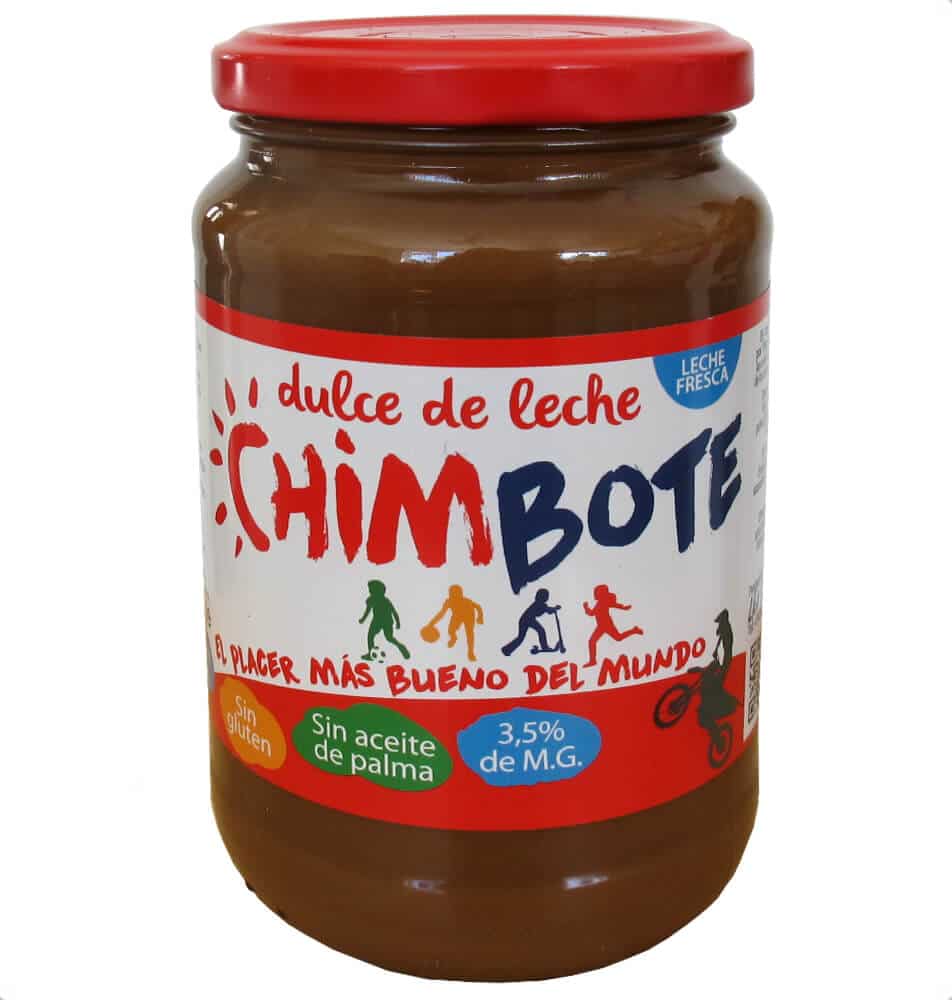
Chimbote is the reliable all-rounder, consistently good quality with a classic Argentine flavour profile that sits right in the sweet spot between mild and intense. Available in 430g, 980g, and 1.1kg pouch sizes, the larger formats offer excellent value for families or frequent users. Their Repostero version is a go-to for home bakers making alfajores and layered cakes; it’s thicker, firmer, and pipes beautifully.
La Salamandra (Argentina)
La Salamandra is a well-known Argentine brand that offers one of the widest ranges of dulce de leche varieties. Their classic version has a robust, full-bodied Argentine flavour: deep caramel with a hint of toasty milk. They also produce a chocolate dulce de leche that blends cocoa into the classic recipe and a squeezy bottle format that’s perfect for drizzling. La Salamandra is not currently available at UruShop, but it remains a respected name worth trying if you come across it.
Los Nietitos (Uruguay)

Los Nietitos is the quintessential Uruguayan dulce de leche, the brand that most Uruguayans grew up with and still swear by. The flavour is slightly smoother and creamier than typical Argentine styles, with a more delicate, milk-forward character. They also produce a low-sugar version for those watching their intake, a hazelnut variety that adds nutty depth, and a larger 780g jar for households that go through it quickly, which, in our experience, is most of them.
San Ignacio (Argentina: Value)

San Ignacio delivers solid Argentine quality at a very approachable price point. The flavour is honest and straightforward: good caramelisation, pleasant sweetness, smooth texture. It’s an excellent choice for everyday use, whether you’re spreading it on morning toast or baking a batch of brownies. If you’re new to dulce de leche and want to try the real thing without a premium price tag, San Ignacio is a smart starting point.
Onda Onda (Gourmet)

Onda Onda is a gourmet dulce de leche crafted using traditional South American methods with high-quality ingredients. The result is a premium product that holds its own against the best imported brands. Their Repostero version has become popular with professional bakers and cake makers, and their Casero (homestyle) version offers a more rustic, artisanal character.
Where Can You Buy Dulce de Leche in the UK?
UruShop stocks the UK’s widest range of authentic South American dulce de leche, with over 20 products from six trusted brands, all shipped from our UK warehouse for fast delivery with no import delays or customs surprises. Orders over £50 qualify for free UK mainland shipping.
Why Not Just Buy Supermarket “Caramel”?
This is an important distinction. The Carnation “caramel” and similar products sold in UK supermarkets are not the same as real dulce de leche. Supermarket caramel is a mass-produced confectionery product with added thickeners and stabilisers, manufactured quickly using a very different process. Authentic dulce de leche follows a traditional South American recipe, slow-cooked to develop the Maillard reaction that produces its characteristic depth of flavour, colour, and complexity.
The difference is immediately obvious on first taste. Real dulce de leche has layers of flavour: milky sweetness, deep caramel, hints of toffee. Supermarket caramel tends to taste one-dimensionally sweet. Once you’ve tried the genuine article, it’s very difficult to go back.
What We Offer
- 5 brands from Argentina and Uruguay
- Multiple sizes from 400g jars to 1.1kg bulk pouches
- Specialist types including repostero (baking grade), chocolate, hazelnut, and low-sugar
- UK warehouse: orders typically dispatched within 1–2 working days
- Free shipping on orders over £50 (UK mainland)
How Should You Store Dulce de Leche?
Unopened dulce de leche is shelf stable and will keep for 12 months or more; just check the best-before date printed on the jar or pouch. Store it in a cool, dry place away from direct sunlight, much as you would any jarred preserve.
Once opened, transfer to the fridge and use within 3–4 weeks. The surface may darken slightly over time; this is normal oxidation and doesn’t affect safety or flavour. Always use a clean spoon to avoid introducing moisture or contaminants.
Can you freeze dulce de leche? Yes. Dulce de leche freezes well for up to 3 months. Transfer it to an airtight container (leaving a little headspace for expansion), then thaw overnight in the fridge when you’re ready to use it. The texture may be very slightly grainier after freezing, but a good stir will bring it back to near-original consistency.
Quick tip: If your refrigerated dulce de leche is too thick to spread, let it sit at room temperature for 15 minutes, or warm it gently in the microwave for 10–15 seconds. It will loosen right up without losing any flavour.
Frequently Asked Questions About Dulce de Leche
No, dulce de leche is not the same as caramel. Caramel is made by heating sugar until it melts and browns (a process called caramelisation), whereas dulce de leche is made by slowly cooking milk and sugar together for several hours, a process driven by the Maillard reaction between the milk proteins and sugars. The result is a richer, more complex flavour with distinct milky, toffee-like depth that plain caramel simply doesn’t have.
Yes, authentic dulce de leche is naturally gluten free. Traditional dulce de leche contains only milk and sugar, neither of which contains gluten. All the brands we stock at UruShop (Havanna, Chimbote, Los Nietitos, San Ignacio, and Onda Onda) are made without gluten-containing ingredients, though you should always check the label for allergen warnings regarding manufacturing environments.
No, traditional dulce de leche is not vegan. It is made from cow’s milk, which is the primary ingredient and the source of its distinctive creamy flavour. Some specialist producers make plant-based alternatives using coconut milk or oat milk, but these are a different product entirely and are not widely available in the UK at present.
Once opened, dulce de leche should be refrigerated and used within 3–4 weeks for the best quality. It will remain safe to eat for some time beyond this, but the flavour and texture may begin to deteriorate. Always use a clean spoon and keep the lid tightly sealed to maximise its shelf life.
Dulce de leche tastes like a rich, deeply caramelised milk toffee: sweet, creamy, and warmly complex with notes of butterscotch and vanilla. It is significantly more nuanced than plain caramel or golden syrup, with a velvety smooth texture that coats the palate. The closest comparison in British cooking might be the filling of a banoffee pie, but richer and more rounded.
Yes, you can make a version of dulce de leche by slowly heating a tin of sweetened condensed milk, either by simmering the sealed tin in water for 2–3 hours or by baking the condensed milk in a bain-marie at 220°C for around 90 minutes. The result is a reasonable approximation, but it won’t have quite the same depth of flavour as commercially produced dulce de leche, which uses fresh whole milk and a carefully controlled cooking process. For consistent results and authentic taste, we recommend using the real thing.
Dulce de leche repostero (also called pastelero or baking grade) is a thicker, firmer version specifically designed for pastry and baking applications. It contains more milk solids and less moisture than regular (clásico) dulce de leche, which means it holds its shape when piped, spread between cake layers, or used as a filling in alfajores. Regular dulce de leche is softer and more spreadable, ideal for toast, pancakes, and eating by the spoon. Use repostero whenever you need structure; use clásico whenever you want flow.